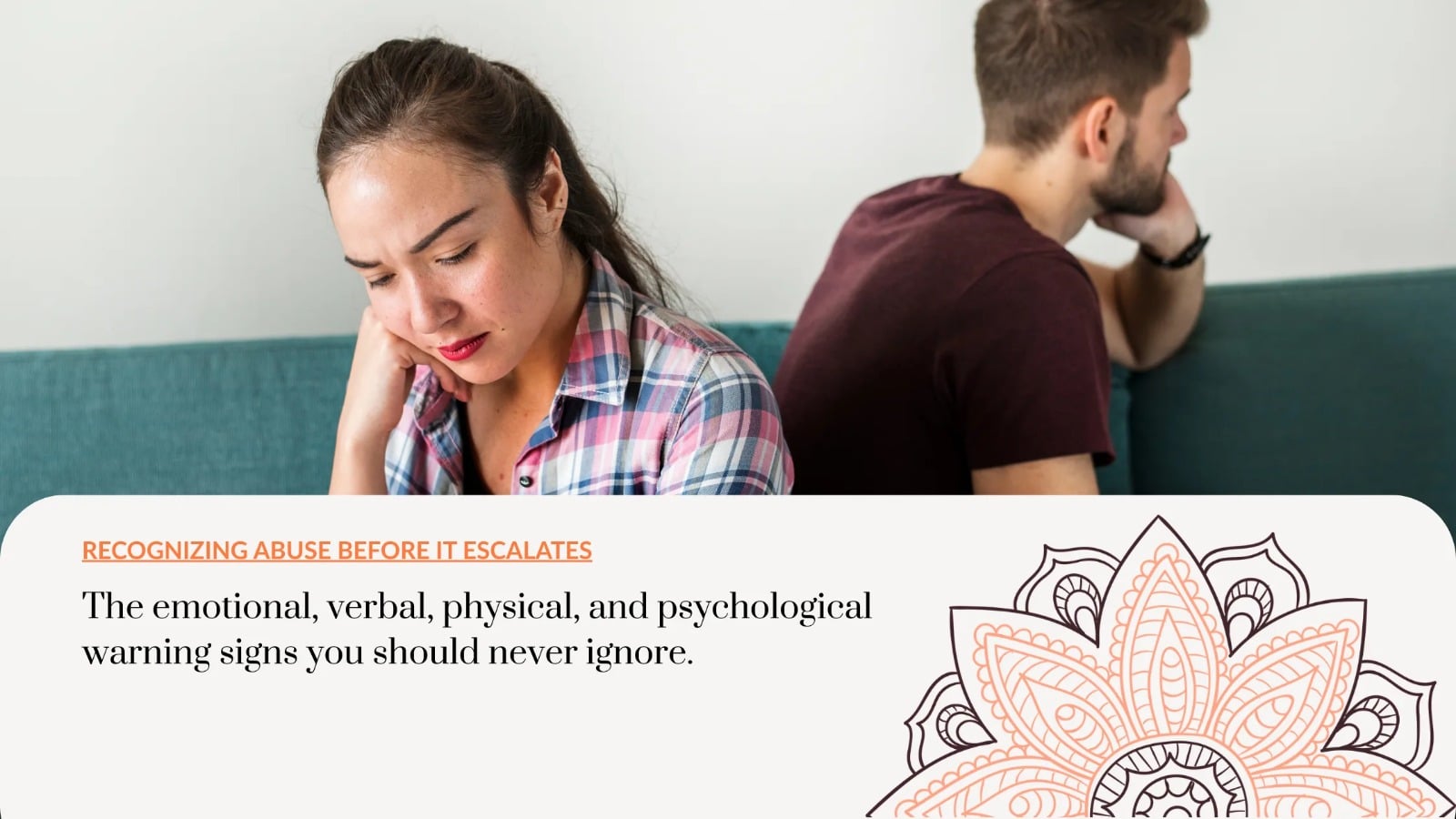
Abusive relationships rarely announce themselves as abusive. They don’t begin with cruelty or control. More often, they begin with intensity—deep connection, possessiveness, jealousy, constant attention, a sense of being seen or chosen. There may be grand promises, emotional closeness, and the feeling that this relationship is somehow different from anything you’ve known before.
And then, gradually, something shifts.
The change is often so subtle that it’s hard to name. You may feel slightly unsettled, more careful with your words, less sure of yourself. Understanding what abuse truly is and how it often hides behind affection can help you recognize these shifts early and protect your emotional well-being.
What Really is an Abusive Relationship
At its core, an abusive relationship is one where power and control replace mutual respect and emotional safety. This control may be intentional or unconscious, but its impact is the same: one person slowly dominates the emotional, psychological, sexual or financial space of the other.
Abuse is not limited to physical harm. In fact, many abusive relationships never involve physical violence at all. They may be emotional, psychological, verbal, financial, sexual, or a combination of several forms. Because much of this harm is invisible, it often goes unnoticed or unvalidated by others.
What makes abuse particularly confusing is that it can exist alongside moments of love, care, and tenderness. This contradiction is what keeps many people trapped in self-doubt.
What Is Emotional and Psychological Abuse? (Signs & Examples)
When people think of domestic violence, they often picture physical harm. But verbal and financial abuse are powerful forms of control that can keep someone in fear without leaving physical evidence. This type of abuse includes behaviors used to scare, isolate or dominate the victim. Common signs include:
- Name‑calling, humiliation or constant criticism that slowly erodes self‑esteem.
- Gaslighting to make you doubt your perceptions, memories or sanity so you trust the abuser’s version of reality.
- Threats, intimidation or unpredictable mood swings designed to keep you on edge.
- Isolation and monitoring by restricting who you meet, what you do and even checking your messages and other communications.
- Financial control by withholding money, preventing you from working or controlling all spending to make you dependent.
Emotional and Psychological Abuse: The Quiet Erosion
Emotional and psychological abuse is the most common and the most difficult to recognize. It doesn’t leave bruises, but it slowly dismantles your sense of reality.
You may find yourself being told that you’re overreacting, imagining things, or remembering events incorrectly. Over time, this gaslighting creates profound self-doubt. Criticism may be constant but subtle, often framed as concern, honesty, or humor. Affection may be withdrawn as punishment, leaving you anxious to “fix” things without ever being told what you did wrong.
The most damaging effect is not the behavior itself, but the way it teaches you to mistrust your own perceptions.
Common Trauma Responses: Fight, Flight, Freeze & Fawn
Many people know about the fight‑or‑flight response, but trauma can also elicit freeze or and we fawn responses. The freeze response occurs when the body perceives escape or resistance as unsafe or impossible. Survivors may feel immobilized, emotionally numb, disconnected, or unable to act even when harm is occurring. This can look like shutting down during conflict, struggling to make decisions, feeling stuck, dissociating, or experiencing a sense of paralysis when faced with stress. Freeze is the nervous system’s way of conserving energy and minimizing danger when no other option feels available.
The fawn response involves appeasing or pleasing the abusive person to prevent further harm. Survivors may become overly cooperative, avoid conflict, ignore their own needs or take responsibility for the abuser’s behavior. Examples include difficulty saying “no,” making decisions based on others’ preferences and feeling responsible for keeping the peace. Recognize that fawning and hyper‑awareness were adaptive strategies—you did what you needed to survive. Awareness allows you to slowly unlearn these patterns as you rebuild safety.
When Words Become Weapons
Verbal abuse is often dismissed because it doesn’t involve physical harm. But words have the power to wound deeply and lastingly. Insults may be disguised as jokes, sarcasm may replace kindness, and raised voices or threats may become a regular part of conflict.
Over time, these interactions chip away at confidence and self-esteem. You may begin to believe you deserve the way you’re being spoken to or that staying quiet is safer than expressing yourself.
A relationship where communication feels intimidating is not emotionally safe.
Control, Isolation, and Loss of Autonomy
Control is one of the clearest indicators of abuse, yet it often masquerades as care or protection. You may notice increasing scrutiny over how you dress, who you talk to, how you spend money, or what opinions you’re allowed to hold. Gradually, your world may begin to shrink.
Isolation is especially damaging. Abusers often limit or discourage access to friends, family, or outside perspectives to prevent victims from sharing their experiences or receiving validation. When connection is restricted, it becomes harder to reality-check what is happening. Dependence deepens, self-doubt increases, and leaving can begin to feel more frightening than staying.
Isolation deepens this harm. Abusers often limit access to friends, family, or outside perspectives to prevent survivors from sharing their experiences or reality-checking what is happening. As connection decreases, dependence grows, self-doubt intensifies, and leaving can feel more frightening than staying.
Loneliness and Abuse
Loneliness and abuse are closely linked. Abuse creates isolation either through deliberate control or because survivors withdraw due to shame, guilt, or fear of not being believed. Even when someone tries to speak about their experience, the absence of safe spaces or supportive responses can reinforce silence and deepen loneliness.
Fear of loneliness can also keep people in abusive relationships. The desire to avoid being alone may lead to lowered standards, ignored red flags, or the normalization of harmful behavior. Healing involves addressing both the trauma of abuse and the isolation it created, and slowly rebuilding safe, respectful connections that restore choice and autonomy
How Abuse Changes Your Body and Nervous System
Trauma is not just a memory; it is a biological state. Your autonomic nervous system shifts between the sympathetic “freeze and fawn” response and the parasympathetic “rest and digest” state to keep you safe. Chronic stress or abuse can keep your body stuck in high alert: the sympathetic system stays dominant and the parasympathetic system struggles to bring you back to calm. This dysregulation can cause:
- Heightened sensitivity to noise or light, trouble sleeping, digestive issues, fatigue and chronic anxiety.
- Hyperarousal creating muscle tension, irritability, insomnia and an exaggerated startle response that can persist for years.
- Hypervigilance, where the body remains on guard looking for danger.
About 70 % of trauma survivors report hyperarousal and hypervigilance symptoms.
These reactions are survival mechanisms; they help you stay safe when danger is real. The lingering hyper‑awareness after leaving an abusive relationship is not a personal failure but the imprint of trauma.
Physical Abuse and Escalation
Physical abuse includes far more than hitting. It may involve pushing, grabbing, blocking exits, damaging belongings, or threatening harm. These behaviors are about intimidation and dominance, not anger alone.
Physical abuse often escalates over time. What begins as “losing control” or “a one-time incident” rarely remains isolated. Recognizing early signs is crucial for safety.
Warning Signs That Deserve Attention
Many people sense something is wrong long before they can explain why. You might notice that you feel anxious around your partner, that you carefully monitor your words to avoid conflict, or that you’ve lost confidence since being in the relationship. You may feel responsible for managing their emotions, while your own feelings are dismissed or minimized.
Apologies that lead to no real change, repeated cycles of harm followed by remorse, and a persistent feeling of walking on eggshells are not signs of love. Love should feel safe, not fearful.
Why Abuse Is So Hard to Recognize
Abusive relationships are often punctuated by periods of kindness, regret, and emotional or physical closeness. These moments create a powerful bond that makes harmful behavior easier to excuse and harder to leave. Promises of change, emotional vulnerability, and shared history can blur clarity and deepen attachment.
This confusion is reinforced by the cyclical nature of abuse, which often unfolds in four stages: a tension-building stage, where anxiety and fear increase; an incident of abuse, marked by emotional, verbal, physical, or other forms of harm; a reconciliation stage, where apologies, remorse, or affection appear; and a calm stage, when things feel stable or even loving again. These cycles can make abuse difficult to recognize, especially during periods of calm.
Abuse is not defined by isolated bad moments. It is defined by patterns—patterns of control, invalidation, and harm that persist despite apologies.
You Are Not Overreacting
If something in your relationship feels wrong, it deserves your attention. You do not need proof, permission, or validation from others to trust your experience. Your feelings are not an inconvenience, they are information.
Recognizing abuse is not about labeling someone as “bad.” It is about protecting your emotional and physical well-being and choosing clarity over confusion.
Final Thoughts
Awareness is not about judgment. It is about self-protection.
Whether you are questioning a current relationship or reflecting on a past one, understanding the signs of abuse empowers you to make safer, healthier choices. You deserve relationships rooted in respect, emotional safety, and mutual care.
You deserve peace.
You deserve dignity.
You deserve love without fear.
If you are currently in danger or experiencing ongoing abuse, please seek professional or local support immediately. Help is available, and you do not have to navigate this alone. You can contact the 24*7 National Commission for Women (NCW) helpline 14490 for support and guidance. Additionally, reach out to your local helpline or trusted professional for assistance. Help is available, and your safety matters.